


A working AC is not a luxury in Dubai; it is a basic survival need. When temperatures rise, even the smallest AC issue can make driving uncomfortable and unsafe.
Many drivers wait too long before checking their cooling system, which leads to bigger and more expensive repairs.
You can avoid most AC failures by understanding early symptoms and addressing them at a trusted place for car repair in Dubai before your system completely fails.
A few simple signs can tell you exactly when your AC needs help, and acting on them early can save you time, comfort, and money.
- Why Your Car’s AC Needs More Care in Hot Climates
- Other Subtle Signs That Suggest AC Improvement Is Needed
- Why AC Systems Fail in the First Place
- How to Keep Your Car’s AC Healthy
- What to Expect During an AC Inspection
- Is It Safe to Keep Driving With AC Problems?
- Conclusion
Why Your Car’s AC Needs More Care in Hot Climates
Car AC systems work harder in regions with extreme heat. Dubai’s weather puts extra pressure on compressors, cooling coils, condensers, and even refrigerant levels. Constant heat exposure, dusty roads, and long daily drives increase the risk of AC failure.
When the AC begins to struggle, the system rarely fails suddenly. Instead, it sends out early warning signs. Recognizing these helps you avoid a complete breakdown during the hottest weeks of the year.
Let’s explore the five most important warning signs that your car’s AC may soon stop working.
1. Weak or Warm Airflow
This is the most common and most obvious sign of AC trouble. When you switch on the AC, you expect cold and steady airflow.
But if you start feeling warm air, weak airflow, or temperature changes, something is wrong.
Why this happens
Weak or warm airflow can be caused by:
- Low refrigerant gas
- Clogged cabin air filter
- A failing compressor
- Evaporator issues
- Blocked air passages
- Leaks in the cooling system
When the AC no longer cools as it should, the problem will grow worse quickly. Refrigerant leaks continue to expand. Dust builds up. Pressure levels change.
If ignored, this can lead to total AC failure.
What it feels like
- Cold air at first, then warm air
- Weak air even when the fan is on high
- Air is coming from the vents, but not cool enough
Why you should act fast
Driving without proper cooling is uncomfortable, but the bigger issue is the damage it causes. A compressor running without enough refrigerant can overheat and fail, and compressor replacement is one of the most expensive AC repairs.
2. Strange Noises When the AC Turns On
Your car’s AC should run quietly. If you hear clicking, grinding, rattling, or buzzing when the AC turns on, it’s a clear warning sign.
What these noises may mean
Different sounds point to different problems:
- Clicking – electrical relay or clutch issues
- Rattling – loose components or a failing blower motor
- Grinding – worn-out compressor
- Buzzing or hissing – refrigerant leak or pressure imbalance
These noises never fix themselves. They usually indicate a part that is wearing down. When ignored, the damage spreads to other components.
Why you should not delay
If the compressor is the source of the noise, ignoring it can lead to a full AC system shutdown. Replacing a compressor is far more costly than repairing a small part early.
3. Bad or Unusual Smells From the Vents
Smells are not just annoying; they are a clear sign of a problem inside your AC system.
Common causes of bad smells
- Mold or bacteria in the evaporator
- Dirty or old cabin air filter
- Moisture buildup inside the AC box
- Leaks causing damp surfaces
- Dust and dirt are trapped inside the vents
In hot and humid climates, mold grows quickly in the AC system. The smell may start lightly, then get stronger over time.
What the smells indicate
- Musty smell – mold growth
- Burning smell – electrical issue
- Sweet smell – coolant leak
- Dusty smell – clogged filters
Why you should take it seriously
Breathing contaminated air can cause headaches, allergies, coughing, and discomfort. If the mold reaches the evaporator, the repair becomes more expensive and time-consuming.
4. Water Leaking Inside the Cabin
A working AC removes moisture from the air and drains it safely outside the car. But when something is wrong, water may start leaking inside your cabin, usually on the passenger side.
Why leaks happen
- Blocked AC drain pipe
- Damaged evaporator case
- Loose hoses
- Excess moisture due to refrigerant imbalance
- Faulty seals inside the AC system
What drivers often notice
- Wet carpets
- Damp smell inside the car
- Foggy windows
- Water dripping under the dashboard
These signs mean your AC drain is clogged or leaking. If this continues, it can damage carpets, wiring, and sensors inside the car.
Why is immediate repair needed?
Water leaks may seem small, but moisture inside the dashboard can lead to electrical failures, one of the most complicated repairs. Fixing the cause early saves both time and money.
5. AC Turning On and Off by Itself
If your AC switches on and off randomly, cools inconsistently, or works only for a few seconds before stopping, it is a major warning sign of internal failure.
Possible causes
- Faulty pressure switches
- Failing compressor clutch
- Electrical issues
- Low refrigerant levels
- Faulty AC control module
Your AC system depends on stable pressure to function. When the pressure is too high or too low, the system shuts off automatically to protect itself. This automatic shutdown means something is wrong.
What this issue feels like
- The AC cools well at first but briefly pauses before cooling again.
- Cooling stops when the car slows down, but returns smoothly once you accelerate.
- The AC restarts on its own as soon as the engine picks up speed.
- You enjoy cool air for 10–20 seconds at a time before it cycles again.
Why you should not ignore this
Addressing this early helps your AC system stay strong and efficient. Continuous on-and-off cycling puts extra pressure on the compressor, and fixing it in time protects you from costly repairs and keeps your cooling performance smooth.
Other Subtle Signs That Suggest AC Improvement Is Needed
Even if the main signs don’t appear, your car may give gentle hints that the AC needs attention:
- Air takes a little longer to become cool.
- Cooling feels stronger while driving but lighter when idling.
- The engine feels slightly heavier when the AC is on.
- You notice light moisture or dampness under the hood.
- The AC fuse may trip more often than usual.
- Fuel efficiency drops slightly with AC use.
Spotting these early gives you the chance to maintain peak performance and enjoy consistent cooling without interruptions.
Why AC Systems Fail in the First Place
Car AC systems are sensitive and depend on many parts working together. Failures usually come from:
- Refrigerant Leaks: Leaks slowly reduce cooling power until the AC stops working.
- Dust and Blockages: Dusty roads cause clogged filters and blocked evaporators.
- High Heat Pressure: Extreme outdoor temperatures increase pressure inside the AC system.
- Lack of Regular Service: Skipping yearly AC checks allows small issues to grow.
- Aging Components: Rubber seals, hoses, and compressors wear out over time.
How to Keep Your Car’s AC Healthy
A few simple habits can make your AC last longer and reduce the chance of sudden failure.
- Use Your AC Regularly: Running the AC keeps gas circulating and prevents seals from drying.
- Replace Cabin Filters Often: A clean filter improves airflow and reduces dust.
- Service AC Once a Year: A yearly check can detect early leaks, weak gas levels, and dust buildup.
- Keep the Condenser Clean: Dust on the condenser reduces cooling efficiency.
- Don’t Ignore Weak Cooling: Small symptoms grow fast; early repair keeps costs low.
What to Expect During an AC Inspection
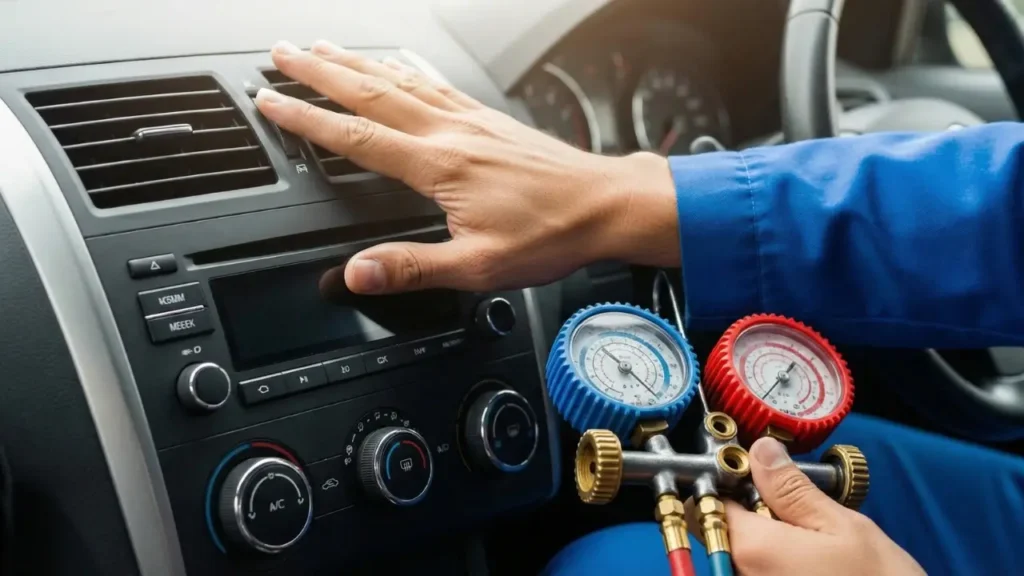
A proper AC check includes:
- Gas level testing
- Leak detection
- AC compressor health test
- Cabin filter inspection
- Cooling coil evaluation
- Condenser cleaning
- Vent airflow testing
- Electrical system checks
This full check helps identify the exact cause of any AC issue.
Is It Safe to Keep Driving With AC Problems?
Technically, you can drive. But it is not recommended.
Here’s why:
- Hot cabins are unsafe and distracting.
- Foggy windows reduce visibility.
- Leaks can damage electrical parts.
- A weak compressor can fail.
- Repair costs rise the longer you wait.
Fixing small problems early makes a huge difference in comfort and cost.
Conclusion
Your car’s AC is your main defense against extreme heat. When it begins to fail, it rarely stops all at once. Instead, it sends clear warning signs: warm air, weak airflow, bad smells, water leaks, strange noises, and irregular cooling.
Paying attention to these signs saves money and prevents major breakdowns. Regular checks, clean filters, and quick repairs ensure your AC works smoothly when you need it the most.
With the right care, your car will stay cool, comfortable, and reliable all year long.
